.png)

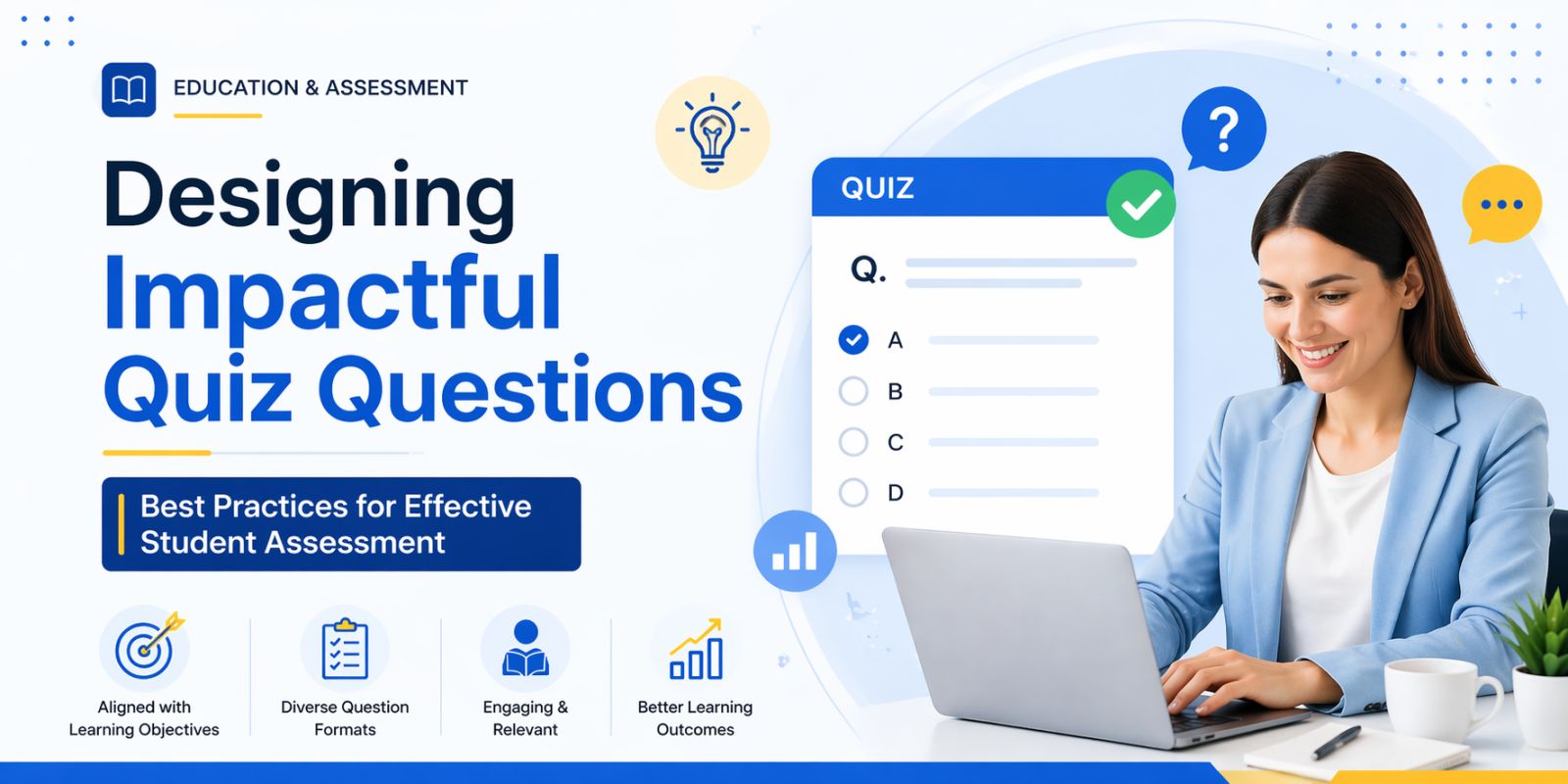
Creating effective quiz questions is a crucial part of any learning experience. Well-crafted questions not only evaluate what students know but also encourage deeper thinking, engagement, and knowledge retention. When designed thoughtfully, quizzes become powerful tools for both assessment and learning.
Why Quiz Design Matters
A quiz is more than just a test—it reflects how well students understand concepts and how effectively content has been delivered. Poorly designed questions can confuse learners, while strong questions can reinforce learning and build confidence.
Key Principles of Effective Question Design
1. Clarity
Questions should be simple, direct, and easy to understand. Avoid unnecessary jargon or complex phrasing that might confuse students. A clear question ensures accurate responses and reduces misinterpretation.
2. Specificity
Each question should focus on a single concept or learning objective. Avoid vague or broad questions, as they can lead to inconsistent answers and unclear assessment outcomes.
3. Relevance
Every question must align with the course content and learning goals. Relevant questions ensure that the quiz truly measures what students are expected to learn.
4. Brevity
Keep questions concise and to the point. Long or complicated questions can overwhelm students and distract from the main objective.
Types of Quiz Questions
Multiple-Choice Questions (MCQs)
These are widely used for quick and efficient assessment. Well-designed MCQs should include:
- One correct answer
- Plausible distractors (wrong options)
This helps test both knowledge and understanding.
True/False Questions
Simple and fast to answer, these are useful for checking basic comprehension. However, they should be used carefully, as they may oversimplify complex topics.
Open-Ended Questions
These questions allow students to express their understanding in their own words. They promote critical thinking and provide deeper insights, though they require more time to evaluate.
Fill-in-the-Blank Questions
Ideal for testing recall and specific knowledge, these questions strike a balance between objective and subjective formats.
Best Practices for Creating Effective Quizzes
Pilot Testing
Before launching a quiz, test it with a small group. This helps identify unclear questions, errors, or technical issues.
Feedback Mechanism
Encourage students to share feedback on quiz questions. Their input can highlight gaps and improve future assessments.
Use Diverse Formats
Mix different question types to keep quizzes engaging. You can also include images, videos, or real-world scenarios to enhance the learning experience.
Adaptive Quizzes
Consider using adaptive quizzes that adjust difficulty based on student performance. This personalized approach keeps learners challenged and motivated.
Conclusion
Designing impactful quiz questions is essential for meaningful assessment. By focusing on clarity, relevance, and variety, educators can create quizzes that not only measure learning but also enhance it. A well-structured quiz doesn’t just test knowledge it strengthens it.



Comments
Loading comments...