.png)

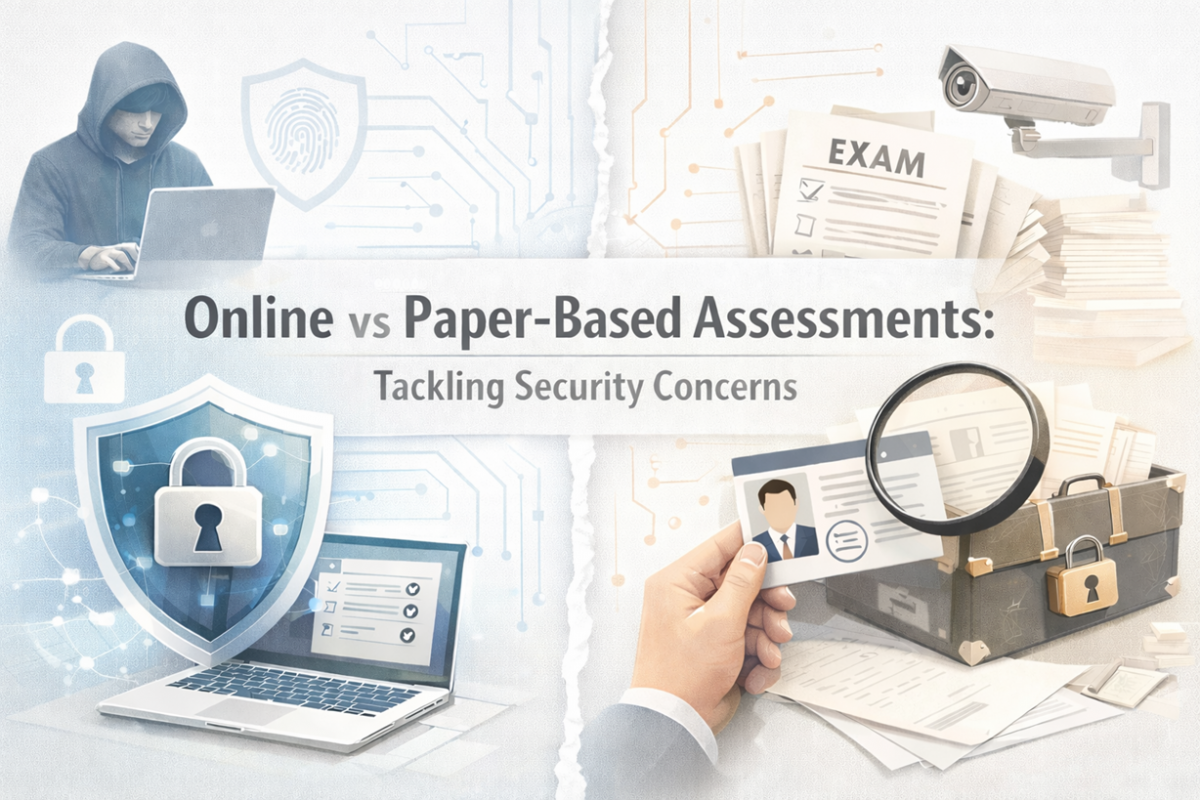
In today’s fast-paced educational and corporate environments, maintaining the integrity of assessments is more important than ever. As organizations shift toward digital transformation, the debate between online and paper-based examinations continues especially when it comes to security.
Both formats have their advantages, but each comes with unique risks that must be addressed to ensure fairness, transparency, and credibility.
Security Challenges in Online Assessments
1. Cyber Threats
Online assessments can be vulnerable to hacking attempts, phishing attacks, and data breaches. Without proper security systems, exam content and candidate information may be exposed.
2. Unauthorized Access
Weak authentication methods may allow unauthorized logins or account sharing, affecting exam integrity.
3. Cheating & Academic Dishonesty
Remote exams can create opportunities for candidates to access external resources or collaborate unfairly if monitoring mechanisms are not implemented.
4. Data Privacy Concerns
Assessment platforms handle sensitive information, including personal data and results. Ensuring compliance with data protection standards is critical.
Strengthening Online Assessment Security
Modern digital assessment platforms are increasingly implementing advanced security measures such as:
- End-to-end encryption for data protection
- Multi-factor authentication for secure access
- AI-powered monitoring tools
- Secure browser environments
- Regular security audits and vulnerability testing
When properly implemented, these measures create a highly controlled and secure digital examination ecosystem.
Security Challenges in Paper-Based Examinations
Traditional exams also face serious security risks, many of which are physical and logistical in nature.
1. Question Paper Leakage
Physical papers can be stolen, photographed, or leaked before the scheduled exam.
2. Impersonation
Manual identity checks may not always prevent someone from taking the exam on behalf of another candidate.
3. Tampering with Answer Sheets
Answer scripts can be misplaced, altered, or damaged without proper supervision and storage.
4. Distribution and Handling Risks
Transporting exam papers between printing facilities and exam centers increases exposure risk.
Improving Paper-Based Exam Security
Institutions typically implement:
- Secure storage facilities
- Strict access control
- Identity verification at exam halls
- On-site invigilation and CCTV monitoring
However, these measures require significant manpower, coordination, and cost.
The Evolving Future of Assessments
As technology continues to evolve, assessment systems are becoming smarter, more automated, and more secure. Digital platforms offer centralized control, real-time monitoring, encrypted data handling, and scalable infrastructure.
Paper-based systems, while familiar, depend heavily on manual processes increasing the possibility of human error and logistical vulnerabilities.
Ultimately, the key lies not in choosing one format blindly, but in implementing robust security frameworks that protect the credibility of the evaluation process.
Conclusion
Assessment security is not optional it is fundamental. Whether conducted online or on paper, examinations must be protected against breaches, fraud, and manipulation.
Organizations that prioritize secure systems, adopt modern technologies, and implement strict protocols will be better positioned to deliver trustworthy and transparent evaluations in the years ahead.





Comments
Loading comments...