.png)


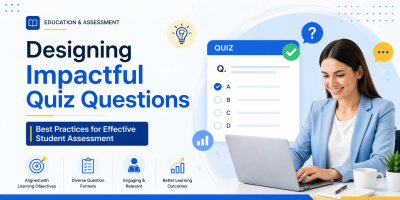
Quizzes play a vital role in education, assessments, and engagement. However, designing effective quiz questions requires more than subject knowledge it involves understanding cognitive psychology, learning theories, and proper question design principles. This article explores the science behind creating impactful quiz questions.
Understanding Cognitive Load
Cognitive load refers to the mental effort required to process information. Effective quiz questions manage cognitive load by:
- Focusing on One Key Concept – Each question should address a single idea to avoid confusion.
- Avoiding Unnecessary Complexity – Keep questions simple and free from distractions.
- Using Clear and Concise Language – Simple wording improves comprehension and accuracy.
Types of Questions
Different question types serve different purposes:
- Recall Questions – Test memory and the ability to remember facts.
- Comprehension Questions – Assess understanding of key concepts.
- Application Questions – Evaluate the ability to apply knowledge in real-world scenarios.
- Analysis Questions – Measure critical thinking and information evaluation skills.
Question Design Principles
To create effective quiz questions, follow these principles:
- Specificity – Clearly define what the question is asking.
- Clarity – Use simple and direct language.
- Unambiguity – Ensure there is only one correct answer.
- Relevance – Align questions with defined learning objectives.
Psychological Factors
Several psychological effects influence how people respond to quiz questions:
- Primacy Effect – People tend to choose the first option more often.
- Recency Effect – Last options are often more memorable.
- Anchoring Bias – Initial information can influence decision-making.
- Confirmation Bias – Respondents prefer answers that confirm their existing beliefs.
Best Practices
To improve quiz effectiveness:
- Use Distractors – Add plausible incorrect options to increase challenge.
- Randomize Answer Order – Reduce bias and ensure fairness.
- Avoid Negative Phrasing – Use positive statements for better clarity.
- Test for Ambiguity – Review questions to ensure they are clear and understandable.
Technology-Enhanced Question Types
Technology can improve quiz engagement through:
- Multimedia Questions – Use images, videos, or audio for better interaction.
- Interactive Questions – Include simulations or user inputs to enhance active learning.
- Adaptive Questions – Adjust difficulty based on learner performance.
Conclusion
Creating effective quiz questions requires understanding cognitive science, learning principles, and thoughtful design. By applying these best practices, quiz creators can develop engaging, accurate, and meaningful assessments that promote better learning outcomes.




Comments
Loading comments...